|
Sidis Archives
Home
Page
|
Notes on the
Collection of Sidis's Pseudonyms
Dan Mahony
"Perhaps some young
researcher will come along and use the limited guidance herein to find
some more works by Sidis buried in some archive." |
Sidis apparently chose for pseudonyms names of persons who had contributed to
society but who were mostly unknown.
When I asked his sister Helena if he used any pseudonyms she replied: "'Parker
Greene'; 'Charles Edward Beals,
Jr.'; 'Barry Mulligan'." I
learned of a fourth, "John W. Shattuck," from his unpublished manuscript of The Tribes and the States which I found in a suitcase in the attic
of a relative. (The suitcase, which Helena had directed me to, had her
name-tag attached.) In the same suitcase were 89 copies of his "Meet Boston" articles
written under "Jacob Marmor."
He may have invented one too. In the case of Notes on the Collection of Transfers,
perhaps "Frank Folupa"
was derived from: Frank
(=French), and fallu-pas (wasn't practical or necessary).
The Library of Congress Online Catalog now acknowledges
five Sidis
pseudonyms:
| DATABASE:
Library of Congress Online Catalog |
| INFORMATION FOR: Sidis, William James, 1898-1944
|
Scope Note:
| Search also |
For works of this author entered under other names, search also under: |
| | Folupa, Frank, 1898-1944. |
| | Greene, Parker, 1898-1944. |
| | Marmor, Jacob, 1898-1944. |
| | Mulligan, Barry, 1898-1944. |
| | Shattuck, John W., 1898-1944. |
|
Sidis's works sometimes provide clues.
Most important: perhaps some researcher will come along and use the
limited
guidance herein to find some more works by Sidis buried deep in some archive.
|
Collisions
in Street and Highway Transportation
"The numbers of
people injured and killed by motor vehicles are said to be at rates
which approximate the losses of a major war."
Library
of Congress Page re Sidis as Author
(when
there click: Scope Note)
|
The compilation and synthesis)
required for this work is perhaps as great as that required for
Notes
on the Collection of Transfers.
The book uses the same format as we find in Transfers and in
The Tribes and the States:
chapters consisting of numbered sections, and headings in italics.
Julius Eichel's Bio referred to Sidis's
"considerable interest in transportation
research." Sidis's Geprodis project was devoted in good part to
transportation research (see below).
No government research grant is mentioned as funding this
work, nor is any funding by a
charitable organisation or foundation. The book was
instead published by the same author-funded "vanity
press" Sidis used for Notes on the Collection of Transfers.
Such a large anonymous contribution would be typical of Sidis.
|
Barry Mulligan
|
|
The Tribes and the
States
|
Two letters to Julius Eichel in August, 1935, refer to a pamphlet
titled The Tribes and the States. In one letter Sidis says it was
"... compiled by the Okamakammessets. I may have
helped, but I certainly do not wish to be considered the author." letters
Continuity News,
Feb., 1939 mentions the pamphlet version.
The New Yorker, July, 1937, describes Sidis's research on Native American
history, and specifically mentions the Okamakammessets. Nowhere else
will one find this tribe's name in print except in the early histories of the
Massachusetts town of Marlborough, and in these the tribe name is spelled
differently. Sidis again claims the book was written by them
Introduction.
|
John W. Shattuck
(Participant in the
Shays Rebellion, 1787, an event Sidis considered to be very
important in American history. Sidis mentions Job Shattuck in
Chapter
26.)
|
|
America's Search for Liberty: In Song and Poem
|
Sidis again uses John W.
Shattuck for this collection of songs, poems, and history. In it some of
the poems of The Tribes and the States are also found. Sidis cites
this work in
Continuity News, Feb., 1939. |
John W. Shattuck
|
|
Meet
Boston
|
The Dictionary of
American Biography says Boris was "the son of Moses and Mary Marmor Sidis."
Another says the same (Boris Sidis bio).
See also Meet Boston, March
7, 1941 in which WJ cites ". . . the small and obscure hobby of peridromophily―the
collection of local transit transfers. . . " In Meet Boston, Feb. 20, 1942, he quotes
from a poem he wrote in his unpublished America's Search
for Liberty in Song and Poem. In the June 26,
1942 issue he mentions his unpublished transit and street guide books. (See
links there.)
Letter to Julius
Eichel, Tues., Sept. 22, 1942, mentions What's New in Town giving his
perpetual calendar " ... a bit of advertising (free) ... " |
Jacob Marmor
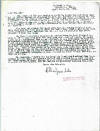
Letter
mentions What's New in Town. |
| The Peridromophile
|
This newsletter is cited in the Geprodis
Organisation News, Feb., 1930. No copies of it have been made
available to the Archives so far. |
|
|
Geprodis Organisation |
Referred to on the Perpetual
Calendar, and in a signed letter. |
|
|
Penacook Courier |
Continuity
News, Oct., 1938 mentions the Penacook Courier. |
|
|
Continuity News
|
This is his pseudonym
for Continuity News. The February 1939
issue cites The Tribes and the States.
Julius Eichel's bio of Sidis says Parker
Greene was a pseudonym. Elsewhere, Sidis mentions this pseudonym in "Meet Boston"
032742,
041742.
|
Parker Greene
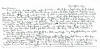
Letter in which Sidis writes: "'Parker Greene' is myself―my
regular pen name."
|
|
The Orarch |
Refers to Continuity News as
"ancestor" of The Orarch July
1943, and used the same mailing address. |
|
.pdf
Home
Page

|